
Breaking the 300′ Barrier


Cleaning tall high-rise buildings has always been challenging, but once a building exceeds 300’ (approximately 30 stories) the situation becomes even more difficult, especially where no engineered swing stage has been permanently installed on the building. At these heights, the requirements for traditional access methods, such as bosun’s chair and swing stage, require specific engineering, as set out in WorkSafeBC regulations. Under these circumstances, an industrial rope access system might be more appropriate.READ MORE
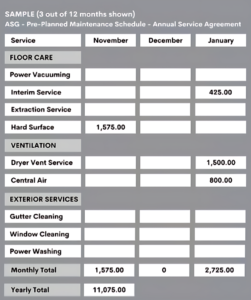
ASG – Annual Maintenance Programs – Pricing Model – Options

Our goal is to keep things simple, create long term relationships, and be highly responsive to your needs. Simply check off what services the site would like to approve and select the option of either a One Time – Project Work or automatic annual scheduling to enter into an Annual Service Agreement.

READ MORE

Cold Weather Service – Automatic vs On Call – Triggers

Two weeks of the thermometer flirting with 0 degrees centigrade has left many managers thinking about their Cold Weather services for Snow Removal and De-icing this winter. The most critical issue of discussion with your provider is what triggers a service, when you select Automatic versus On Call.

READ MORE

Aerial Lifts vs Ladders – WorkSafe Part 11


Services such as gutter cleaning, dryer-vent cleaning and window washing often require workers to perform some kind of work-at-height. Working at heights over 10 feet is considered high-risk by Canadian health and safety authorities and with good reason. Approximately one-third of workplace lost-time injuries and deaths are related to falls from height.

When it comes to our workers, Servus Group believes the only acceptable solution is the safest and best solution. In many cases, companies would rather cut corners by requiring their staff to work off of ladders and rooftops when there are safer and better alternatives. This is not only socially irresponsible, but in many cases may actually incur additional liabilities on both the service company and the property owner.

READ MORE

Ventilation Cleaning Strata Properties – Push Vs Pull – Water Damage ?

Trouble Shooting Water Damage In Dryer Vents

The biggest misconception behind dryer vent cleaning is actually the reason why most people think its necessary. Its not because of the fire risk: they are exceedingly rare occurrences, and usually occur due to the lint trap in the dryer itself not being properly cleaned. Rather, the real risk emerges from blocked vents that condense moisture from the dryer. This, over time, pools, and can cause thousands if not tens of thousands of dollars in damage. The trick, if it can be called that, is early diagnosis of the problem. The first signs of a blockage may seem relatively benign: excessive humidity and steaming in the residence as the air “blows back” from the vent. Clothes may take longer to dry. 

Once condensation occurs and the water starts to pool, the next step is to observe direct signs of damage. Frequently the water find a seam in the vent, which allows it to spill out into the surrounding area. Within the affected region, this will quickly look like any other water leak, including discolouration of the affected material. 

If any of these signs seem familiar to you, let us know… we’ll look at the situation together and determine the best course of action.

READ MORE

TIRED OF SOURCING QUOTES – Quote Fatigue

In our office, property managers often request quotes for multiple buildings simultaneously. While this allows us to demonstrate our capabilities, it can lead to inefficient management.

Strata Corporations may believe they can save money by seeking bids from several providers, but potential savings often diminish with the time required to manage the bidding process and the risks of onboarding new vendors. We propose a consistent, long-term partnership that meets your service needs at or below your budget. How can we achieve this?

READ MORE

Large Projects In The Cleaning World are Different – Critical to put the contractor through a selection framework

It can be a tough process for a Strata to undertake a large cleaning project. Their requirements often involve significant complexity, much of which may not be apparent to the residents when they first set out.

When the strata receives quotes back, they are confused when contractor submit prices and scopes that are wildly different. Moreover selecting the lowest cost often leads to an unsatisfactory outcome, as key facets of the job are unaddressed. This can lead to essential work being uncompleted or a second vendor being called in to complete the job.

How to avoid this situation? First is to grapple with number of essential questions.

  1. Why? Is the project required? what needs to be done?
  2. Clearly defining Specifications – Scope Of Work are not clearly defined
  3. What approach to cleaning? What are the industry standards for
  4. Vetting Contractors – are they reputable? Do they have the capacity and technical ability?
  5. What is the proposed workflow? How disruptive will it be for the location’s residents.
  6. What is the deficiency plan?
  7. Is there a clear point of contact and management structure for both the location and vendor.
  8. Is there a clear communication pathway and approach for providing project update.

When sourcing a contractor for a large cleaning project best results are achieved when you consider above and not simply engage the lowest bidder.